
Non-Surgical
Obesity Treatment
A Healthier Life Without Surgery

Transform your life with safe, effective, and science-based non-surgical obesity treatment.
Endoscopic Tube Stomach
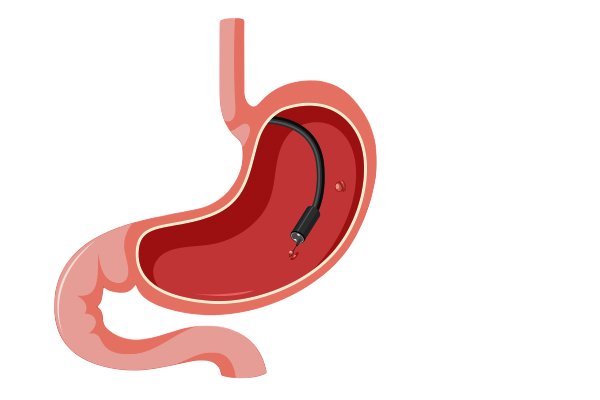
Endoscopic tube stomach, also known as endoscopic sleeve gastroplasty (ESG), non-surgical sleeve, endosleeve, or accordion procedure, is a minimally invasive weight loss method. It is a highly effective weight loss procedure with a very low complication rate. Using the endoscopy method, the size of your stomach is reduced without the need for surgery, using an endoscopic suturing device (OverStitch, Apollo Endosurgery, USA). Your ability to eat is reduced, enabling you to lose weight. Because it is performed endoscopically, you can quickly return to your daily life. If you have weight issues and diet and exercise have not been effective, you can undergo this procedure. If you do not want to have gastric reduction or bypass surgery, it offers a non-surgical option for you.
What is Endoscopic Tube Stomach?
Endoscopic tube stomach is a weight loss procedure performed using endoscopy and a suture device to reduce the size of the stomach by approximately 70-80%. The stomach size is permanently reduced using internal sutures. With the reduction in stomach size, patients feel full more quickly and for longer periods of time.
The prominent feature of the endoscopic sleeve gastrectomy procedure is that it is non-surgical. No incision is made in the abdomen during this procedure, so there is no visible scar. The procedure generally takes 60-90 minutes. Because no incision is made and the procedure is performed endoscopically, patients return to their daily lives quickly. Patients can resume their daily activities on the 2nd or 3rd day.
Advantages of Endoscopic Tube Stomach
- There are no incisions or scars. It is not apparent that surgery has been performed externally.
- Because it is a procedure performed by endoscopy, patients can be discharged on the same day and do not require hospitalization.
- The procedure takes about an hour on average.
- The rate of complications, side effects, and risks is quite low.
- Patients can return to their social activities and daily lives on the second or third day.
- Reflux disease, which is highly prevalent after obesity surgeries, does not develop with non-surgical gastric banding.
- Effective weight loss is achieved by creating a feeling of fullness in patients. The weight lost can be maintained for many years, ensuring permanent weight loss.
Non-Surgical Obesity Treatment Aftercare
After completing your program, maintaining your results is essential;
* Regular follow-up consultations
* Personalized diet maintenance plans
* Physical activity guidance
Our aftercare system ensures long-term success and healthy living.
How Does the Post-Procedure Nutrition Process Work?
After the procedure, you should generally refrain from eating for approximately eight hours. You will then transition to a liquid diet for at least two weeks, followed by a transition to semi-solid foods for four weeks, and then to a healthy nutrition program.
Notice About
Non-Surgical Obesity Treatment
Your comfort, safety, and satisfaction are our top priorities.
We do not offer standard programs. Every patient receives a customized path to success.
- How Much Weight Can Be Lost ?
- What Are the Risks and Side Effects ?
- Who is Suitable
- It results in an average loss of 49% of excess body weight within one year after surgery. Patients can lose an average of 20% of their total body weight by the end of the first year, and more importantly, the weight lost can be maintained for many years, ensuring permanent weight loss. Lifestyle changes and healthy living are important for the procedure to be effective for many years.
- Compared to diet and exercise alone, it can result in 10 times more weight loss.
- Endoscopic tube stomach can produce comparable results to the popular laparoscopic tube stomach surgery (LSG or VSG) and gastric bypass surgery (RYGB).
- It is a procedure approved by the US Food and Drug Administration (FDA). In general, endoscopic tube stomach is a very safe procedure. The associated risks include being under general anesthesia and, in rare cases, bleeding (<1%). Any bleeding that may occur is controlled during and after the procedure.
- After the procedure, you may experience mild pain or discomfort in your throat, which is caused by the insertion of the endoscope into your esophagus during the procedure. This side effect can be seen in all endoscopic procedures. Pain or cramps in the stomach area may occur after the procedure, but this process can be managed with medication
- Non-surgical tube gastric is a suitable option for obese patients (BMI>27) who are not ideal candidates for obesity surgery or who do not want obesity surgery. The endoscopic sleeve gastrectomy procedure can be performed on individuals with a body mass index (BMI) above 27 who have been unsuccessful in maintaining weight loss with other methods.
- It can also be a good option for patients who have previously undergone gastric bypass surgery for obesity but have started to regain weight.
- Endoscopic sleeve gastrectomy not only helps obese individuals lose weight, but also reduces the risk of weight-related diseases such as type 2 diabetes, hypertension, sleep apnea, non-alcoholic fatty liver disease, joint pain (osteoarthritis), and heart disease, and offers a treatment option for existing diseases.
- Patients can achieve a healthy lifestyle by discontinuing their blood pressure and diabetes medications with the endoscopic tube stomach method. Joint pain decreases and mobility increases in patients. Patients’ sleep health and mood improve.
- Endoscopic tube stomach is not suitable for individuals with conditions associated with active stomach bleeding, such as a large stomach hernia or peptic ulcer disease. These conditions can be identified through a control endoscopy performed before the procedure.

